
Essaouira Thermal Baths is a climate-driven bathhouse proposal that produces hot, warm, and cold microclimates through massing, earth-sheltering, wind-catching ventilation, and high thermal-mass construction. The project responds to coastal winds, solar exposure, and low-elevation risks near the historic medina, using courtyard sequencing and passive strategies to reduce operational energy while shaping a ritual bathing experience.
Oct 2025 - Dec 2025
Essaouira, Morocco — Atlantic Coast
Passive Environmental Systems Research & Design Project
ARC 322 Building Systems II (Group Work)
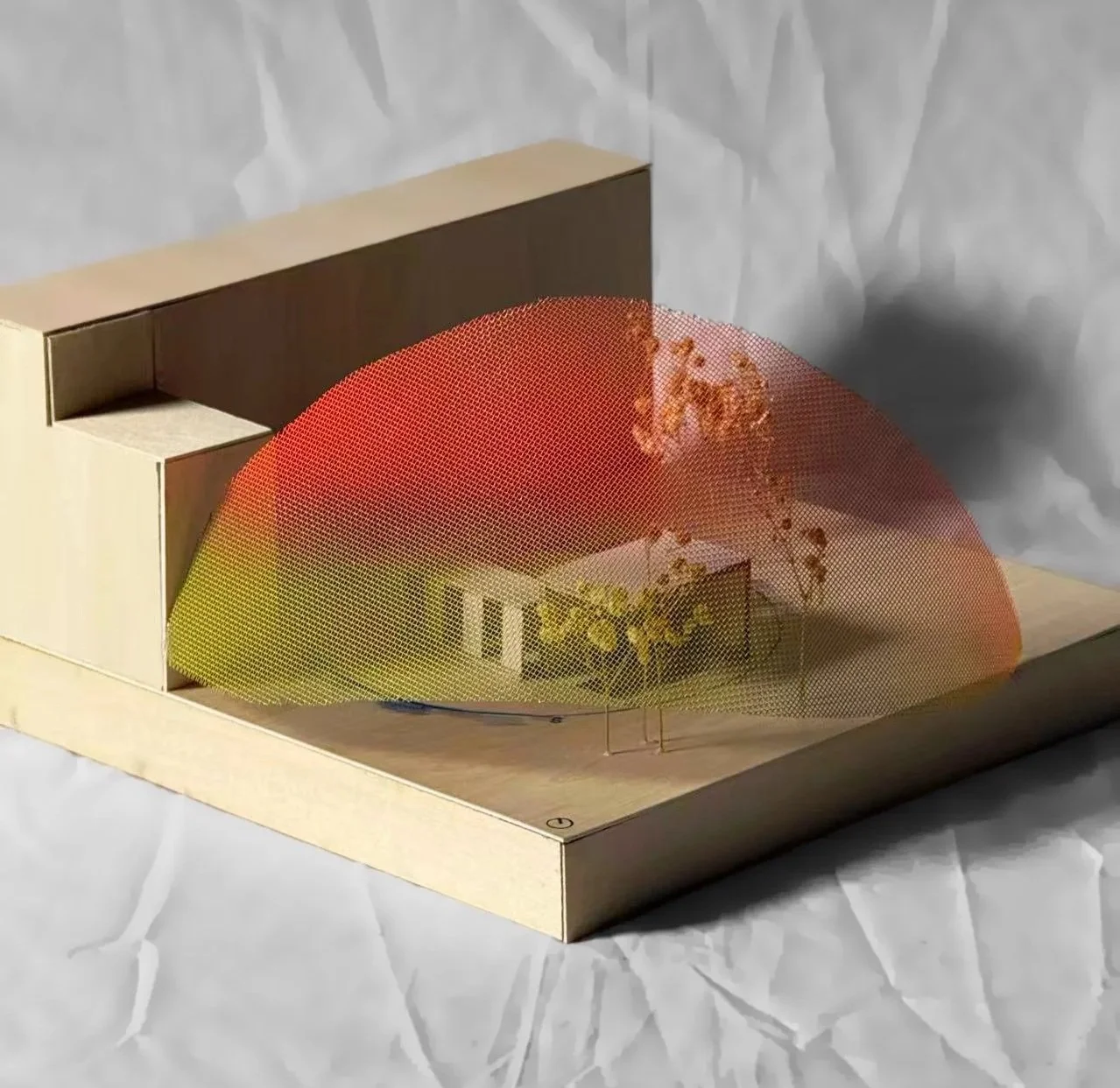
Overall project vision for the Essaouira Thermal Baths, framing the bathhouse as a climate-responsive landscape embedded within the Atlantic coastal edge and historic urban fabric.
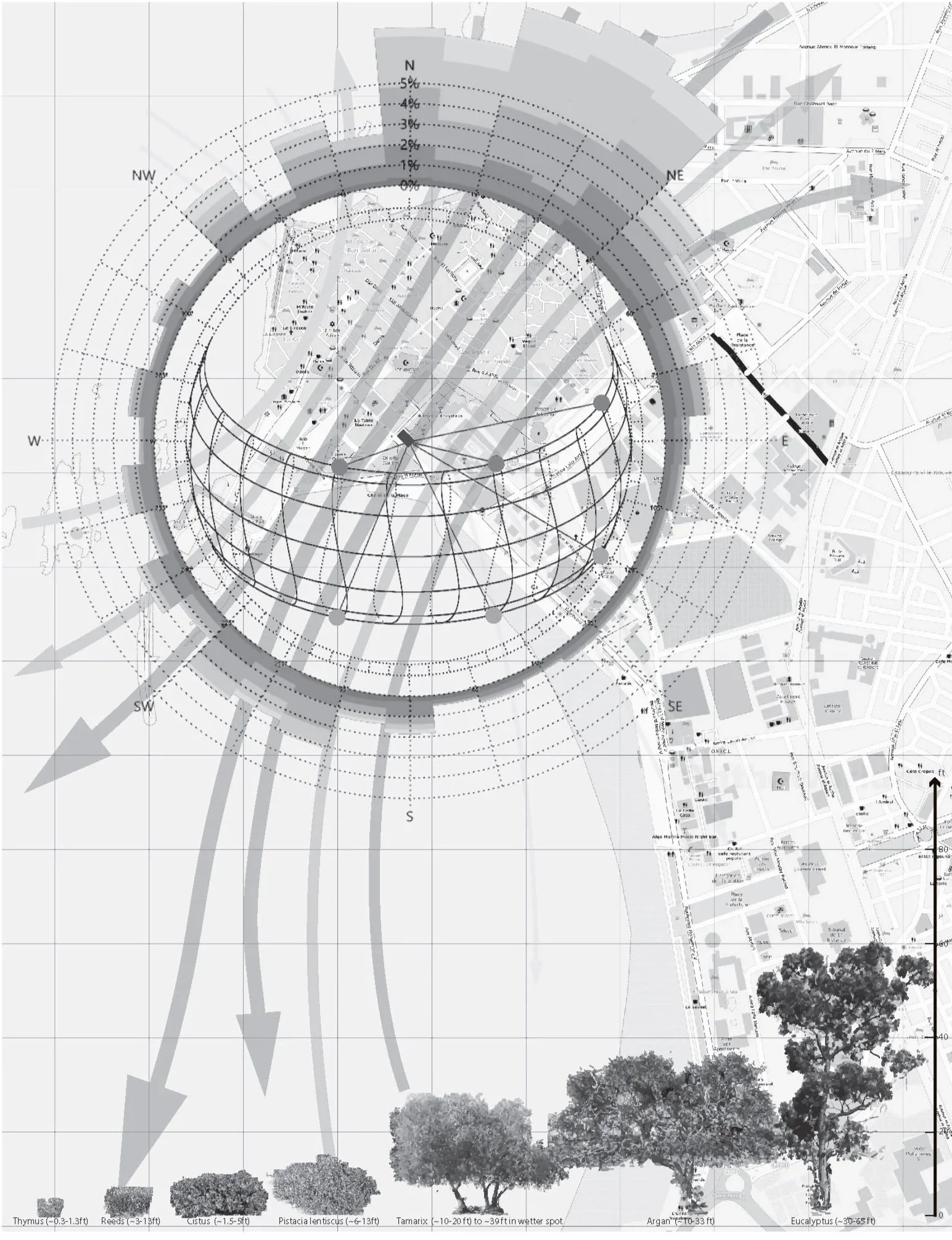
Interpretive site drawing illustrating the bathhouse’s position between the Atlantic Ocean and the historic Medina, highlighting coastal winds, solar orientation, and urban edges shaping environmental conditions.
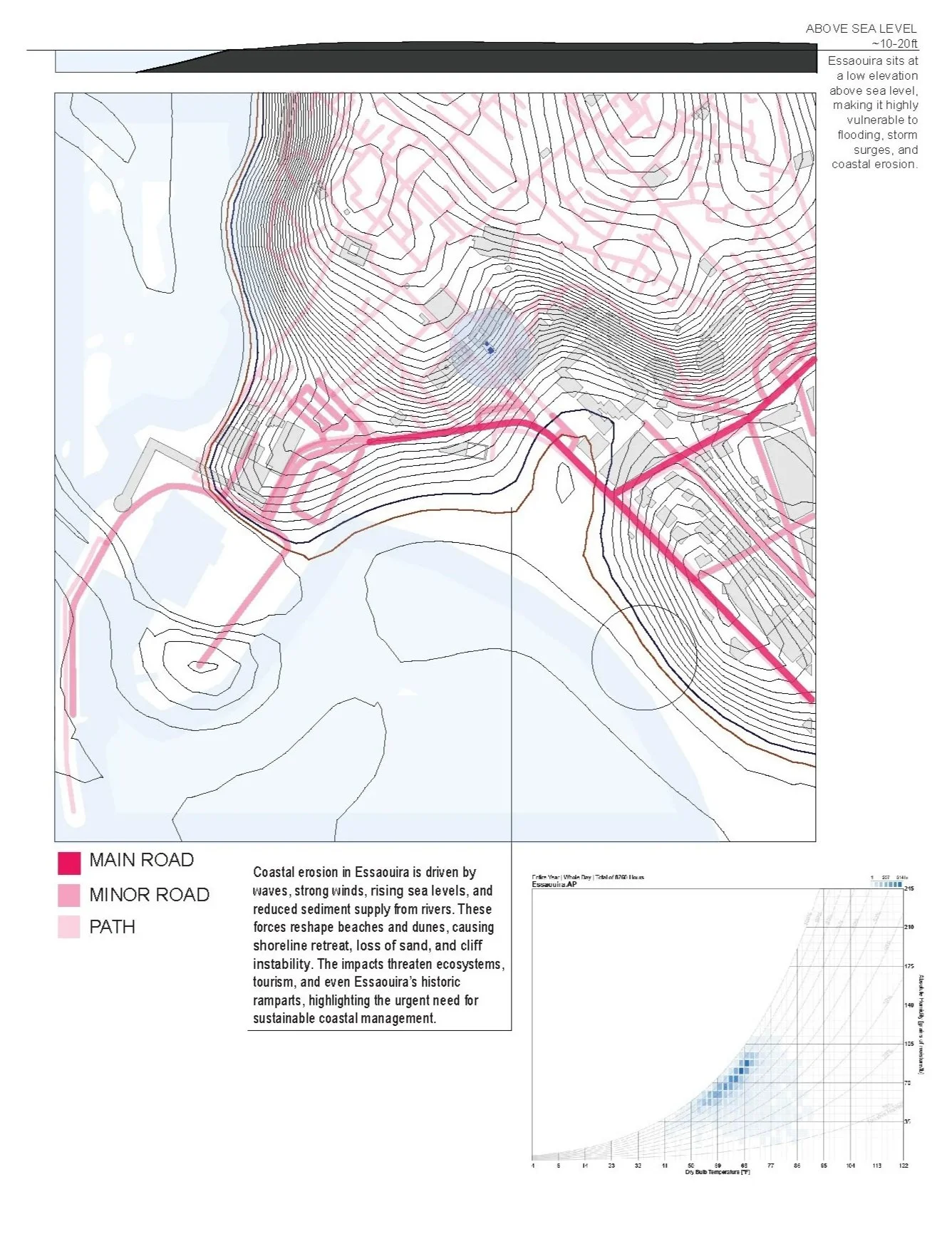
Sectional analysis of coastal elevation and erosion risk, revealing the site’s low-lying condition and vulnerability to storm surge, reinforcing the need for protected and embedded architectural massing.
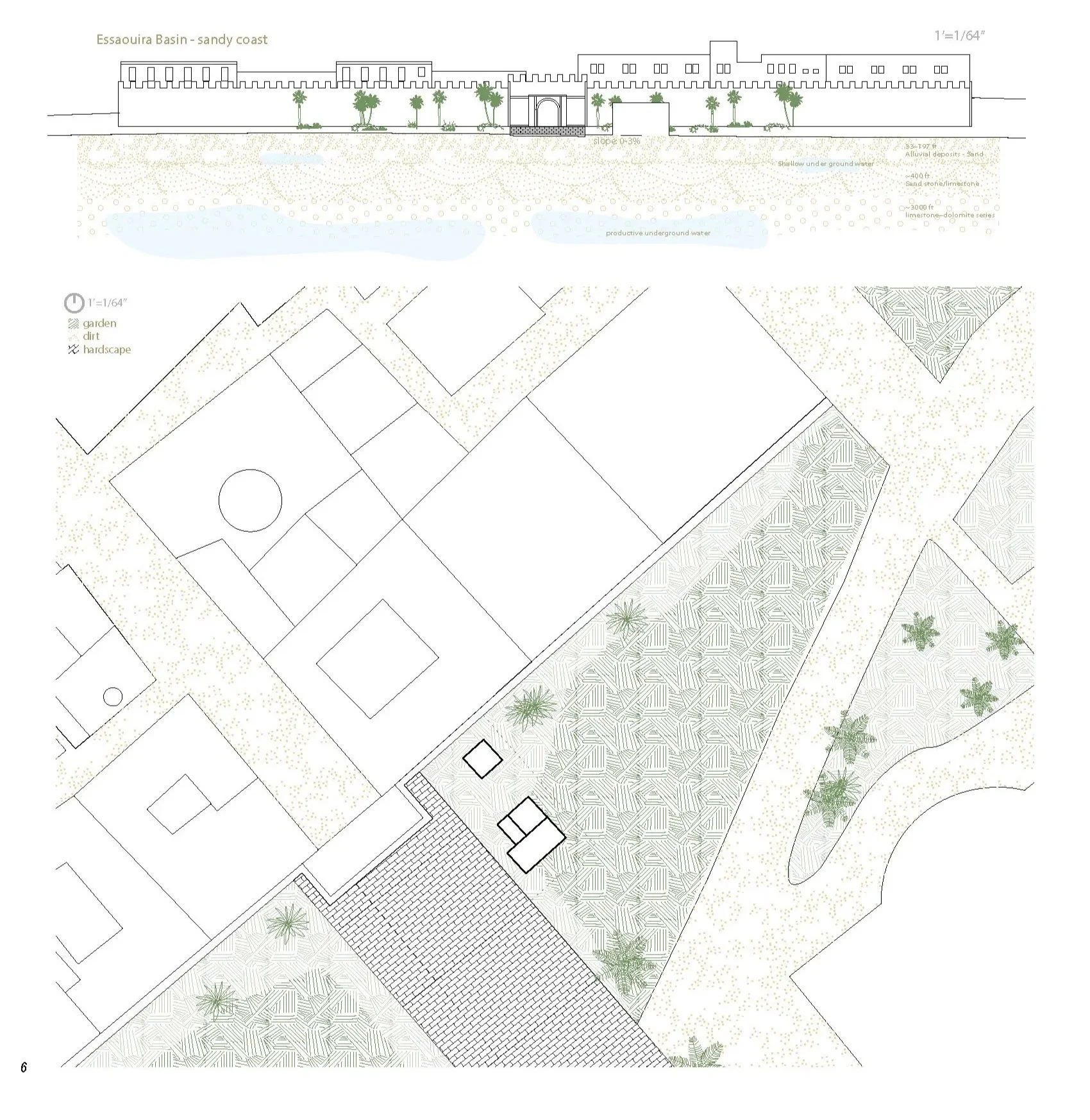
Geological and vegetation analysis demonstrating stable subsurface conditions and native landscape systems that support earth sheltering and microclimate buffering strategies.
Environmental Analysis Drawing
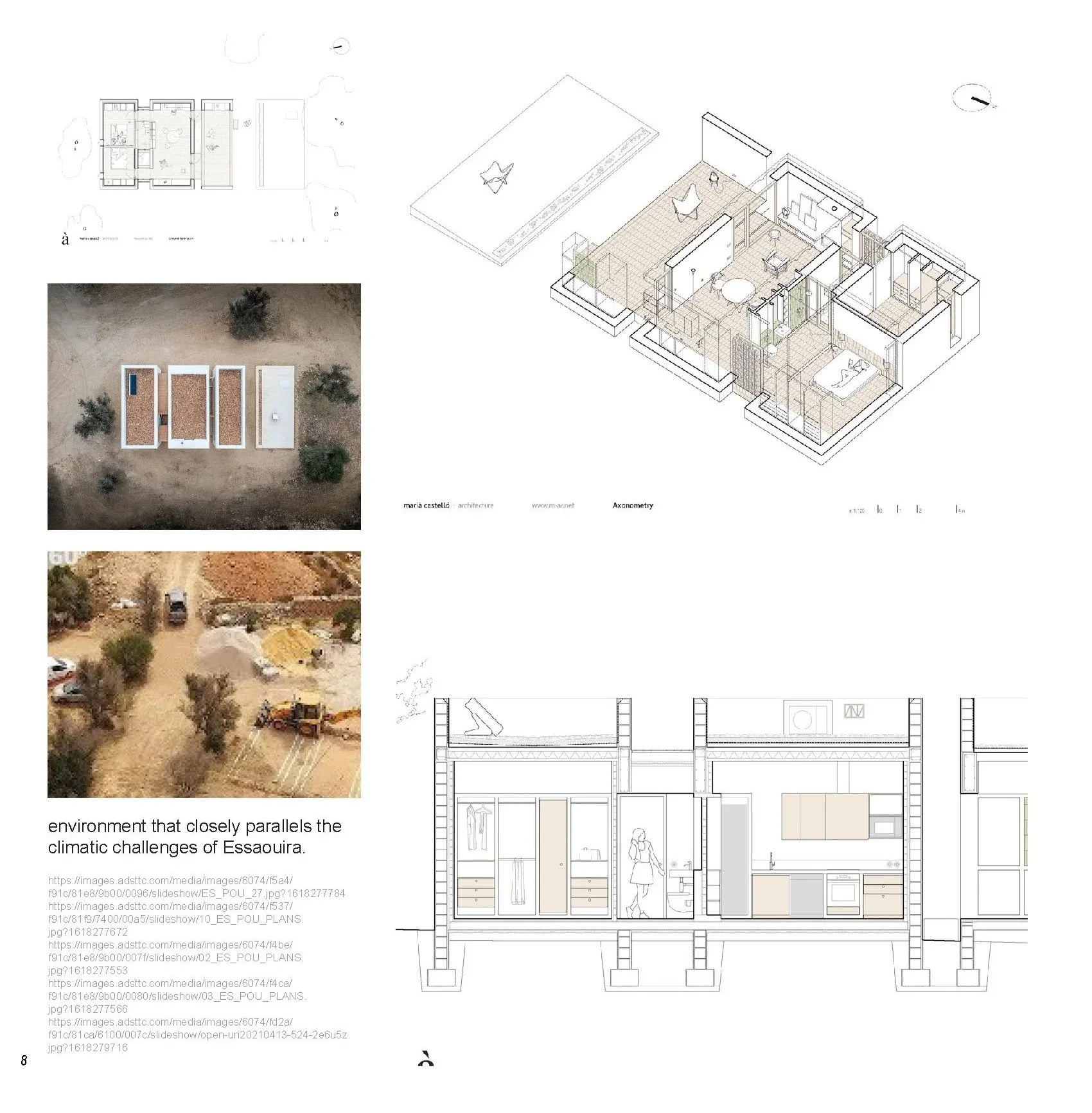
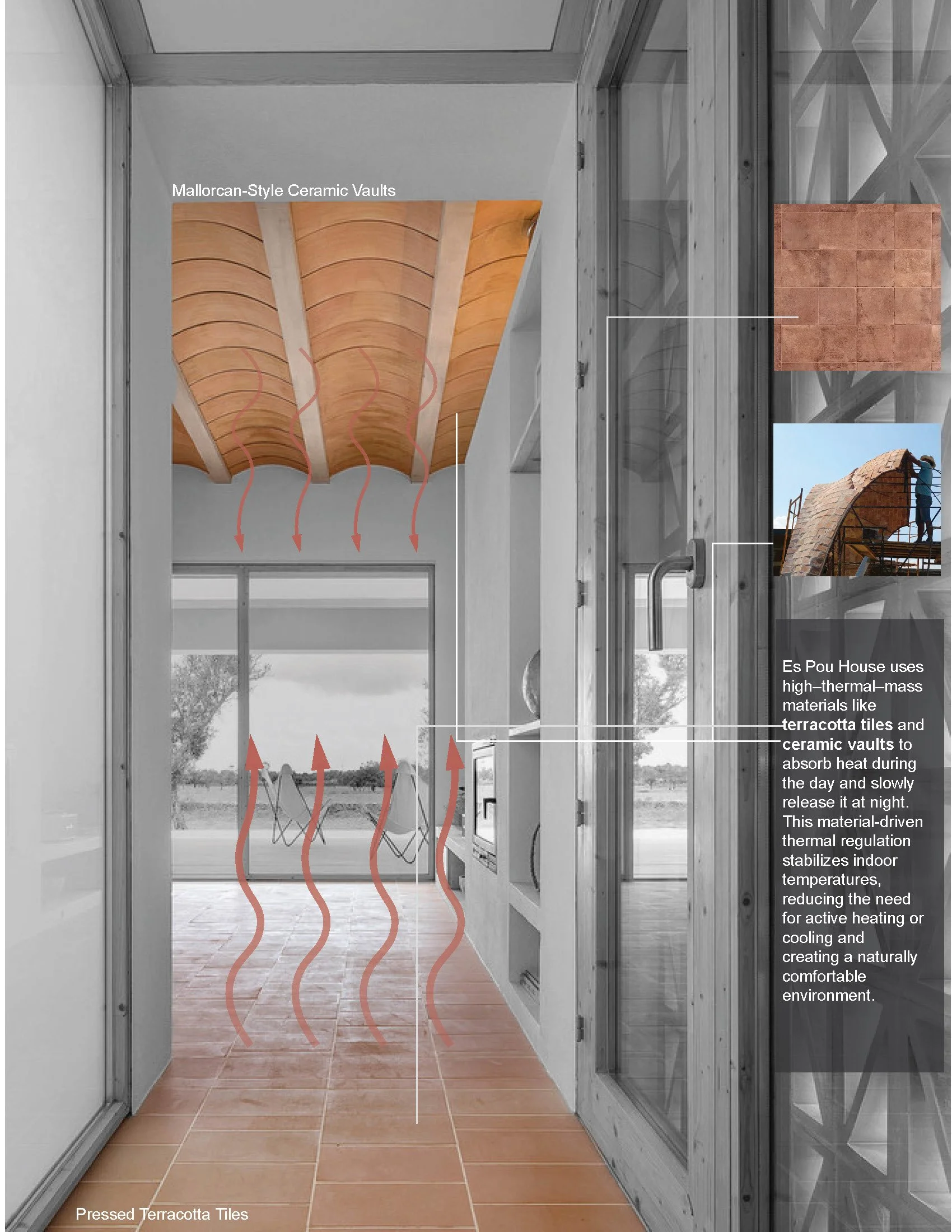
Es Pou House precedent demonstrating the use of ceramic and masonry construction as thermal mass, informing material strategies that stabilize interior temperatures through heat absorption and delayed release.
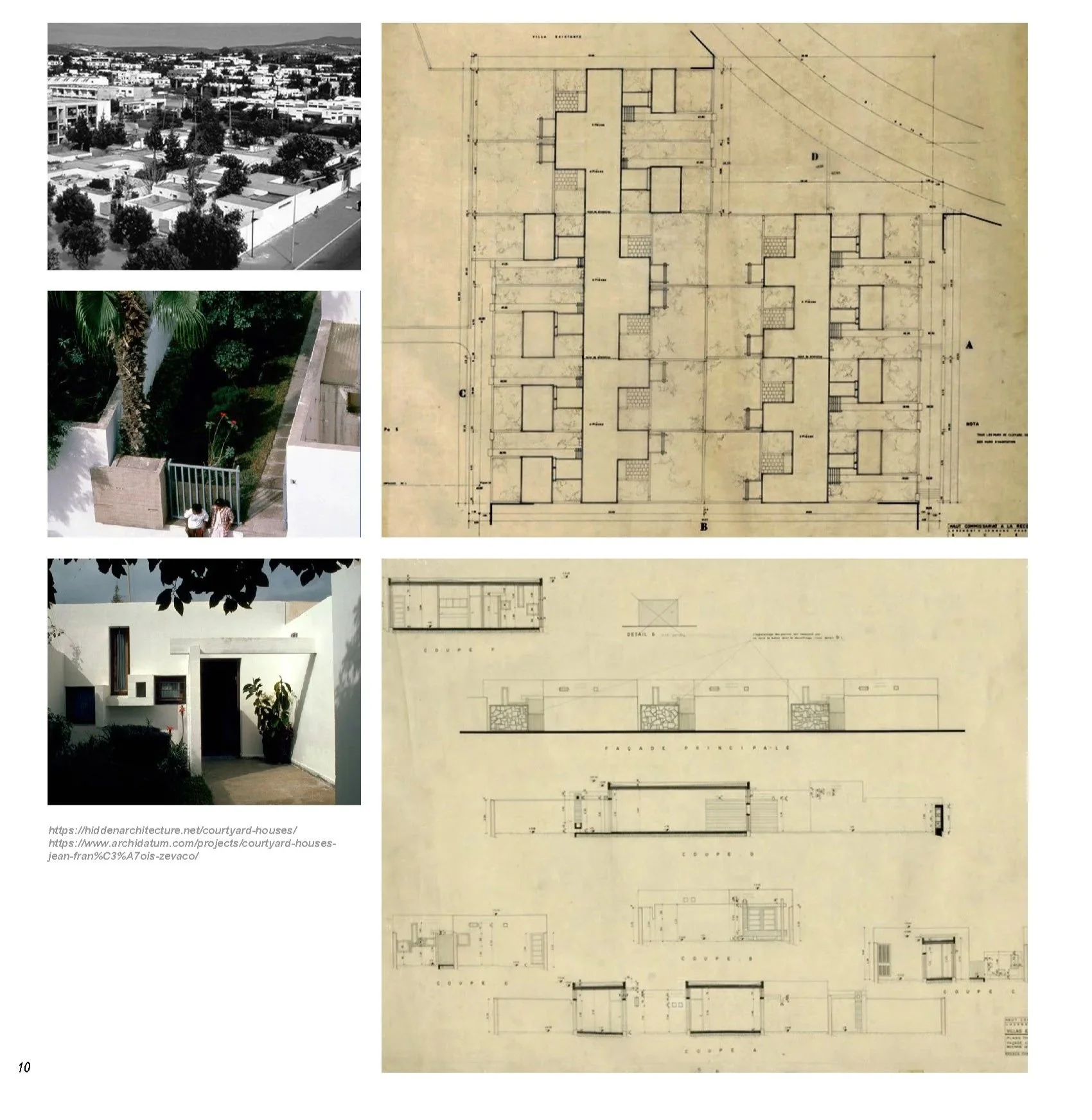
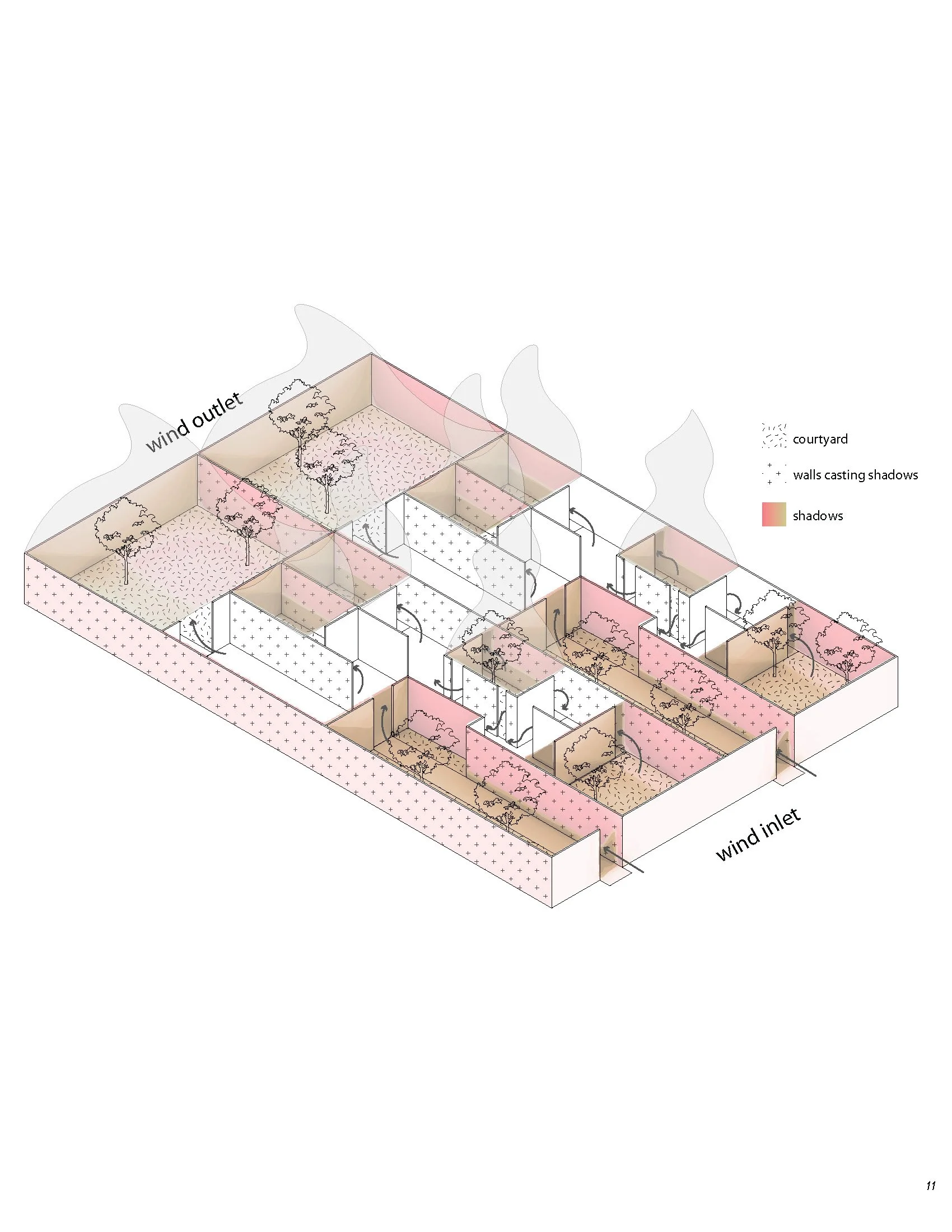
Courtyard housing precedents illustrating how enclosed outdoor spaces generate shaded microclimates, promote cross-ventilation, and serve as social and environmental cores.
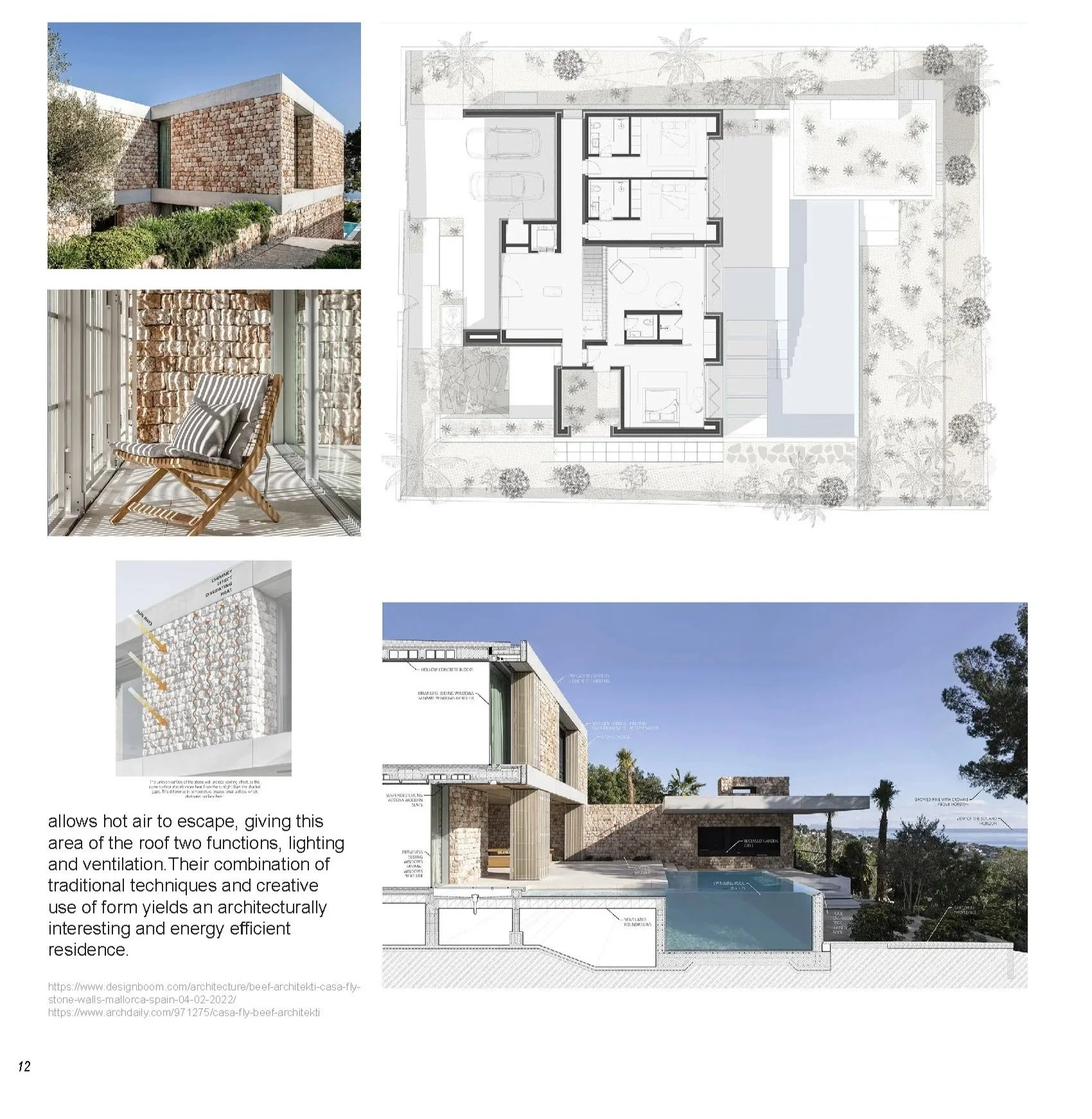
Casa Fly precedent highlighting roof form as an environmental device, using depth, section, and vertical air movement to regulate heat and enhance passive ventilation.
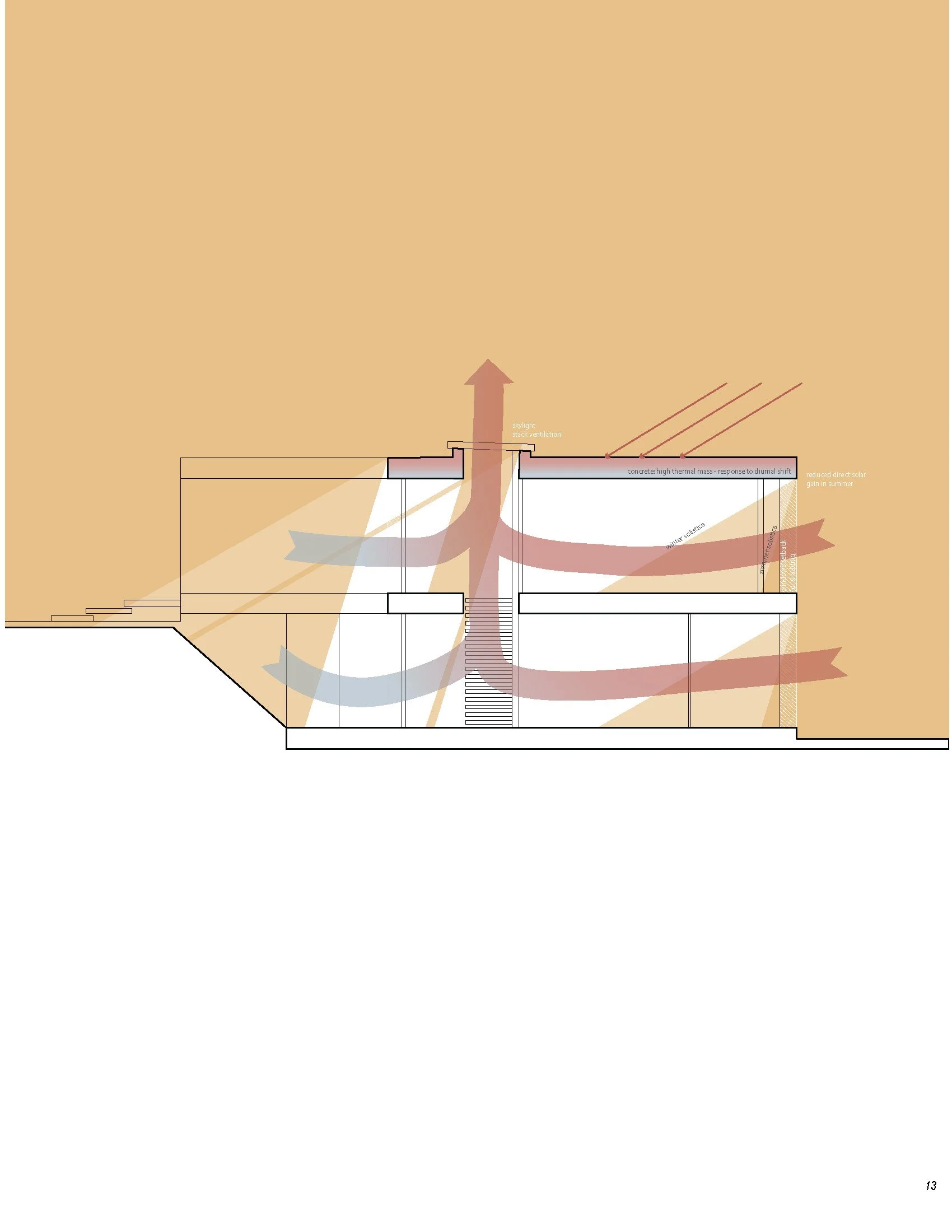

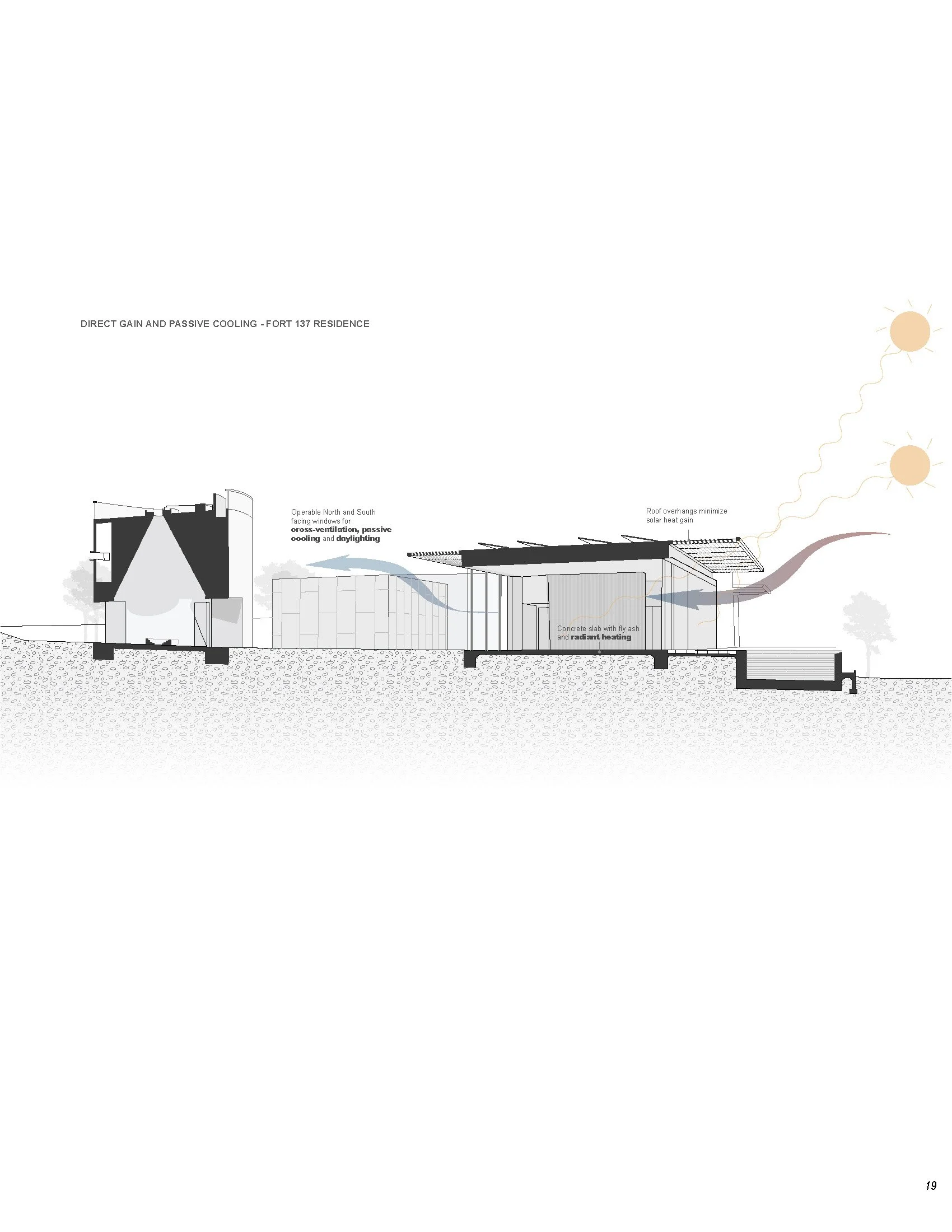
The case studies demonstrate how building form and sectional variation can harness prevailing winds and stack effect to promote continuous natural airflow without reliance on mechanical systems.
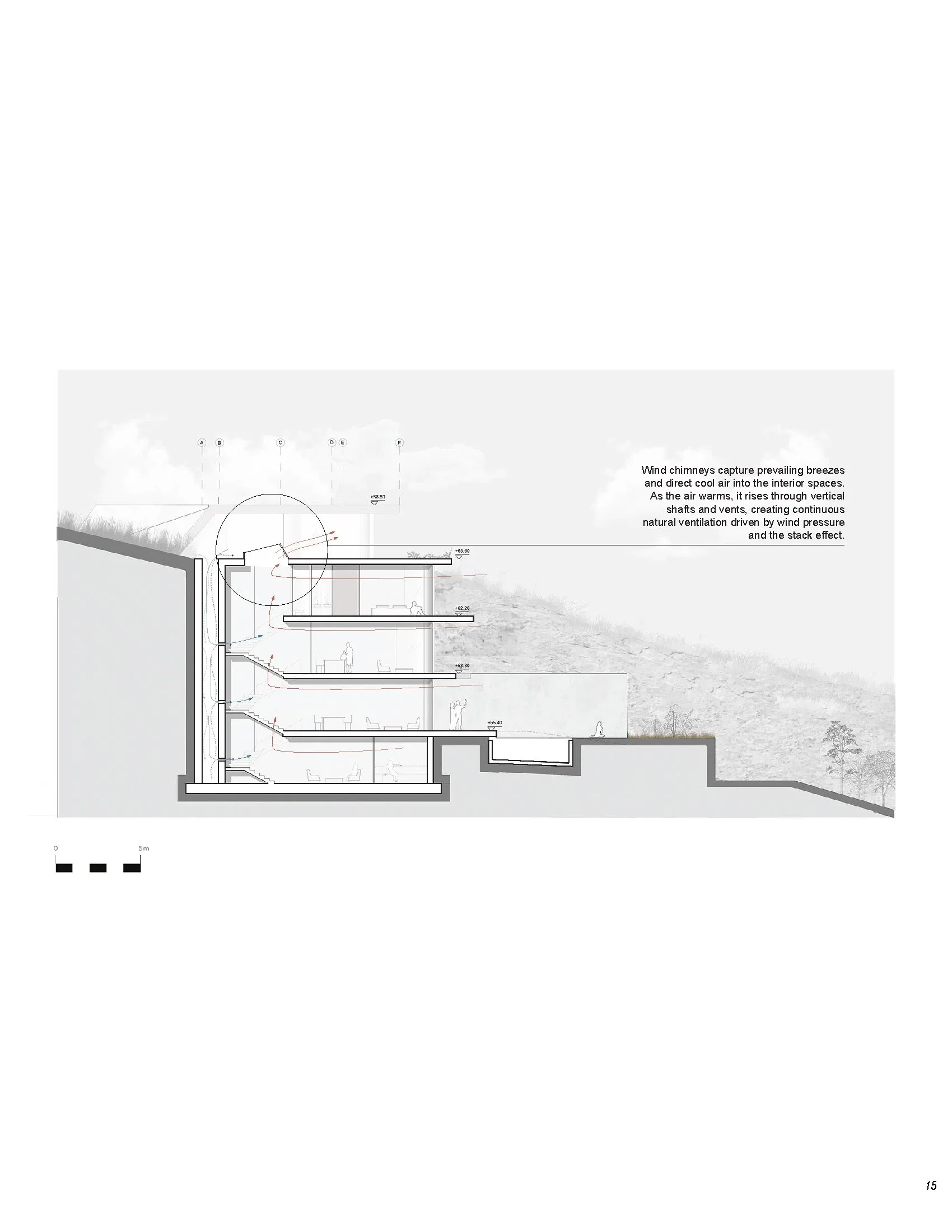
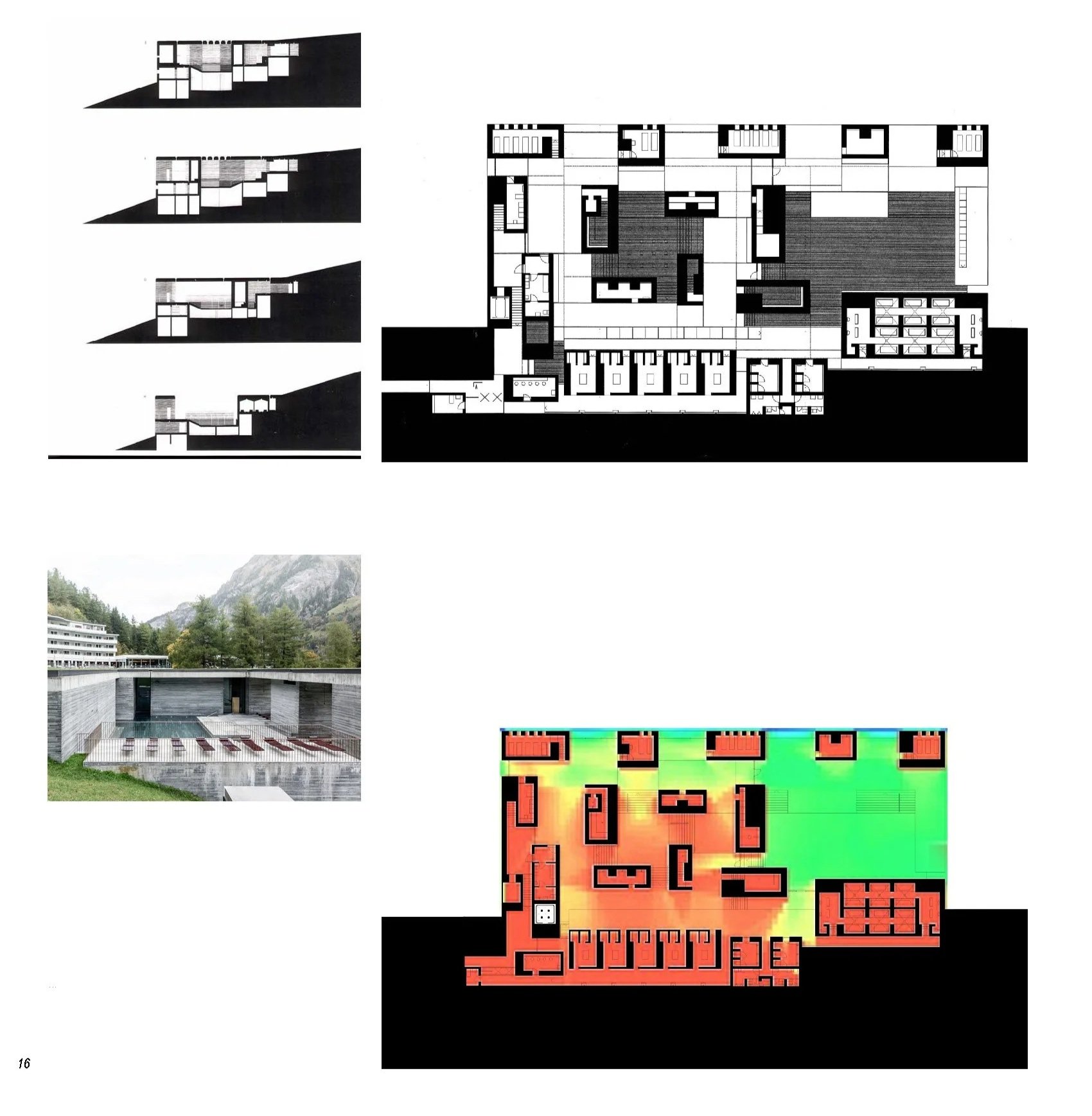
Through partial or full embedding into the ground, the precedents reveal how earth sheltering stabilizes interior temperatures by utilizing the thermal inertia of surrounding soil and mass.
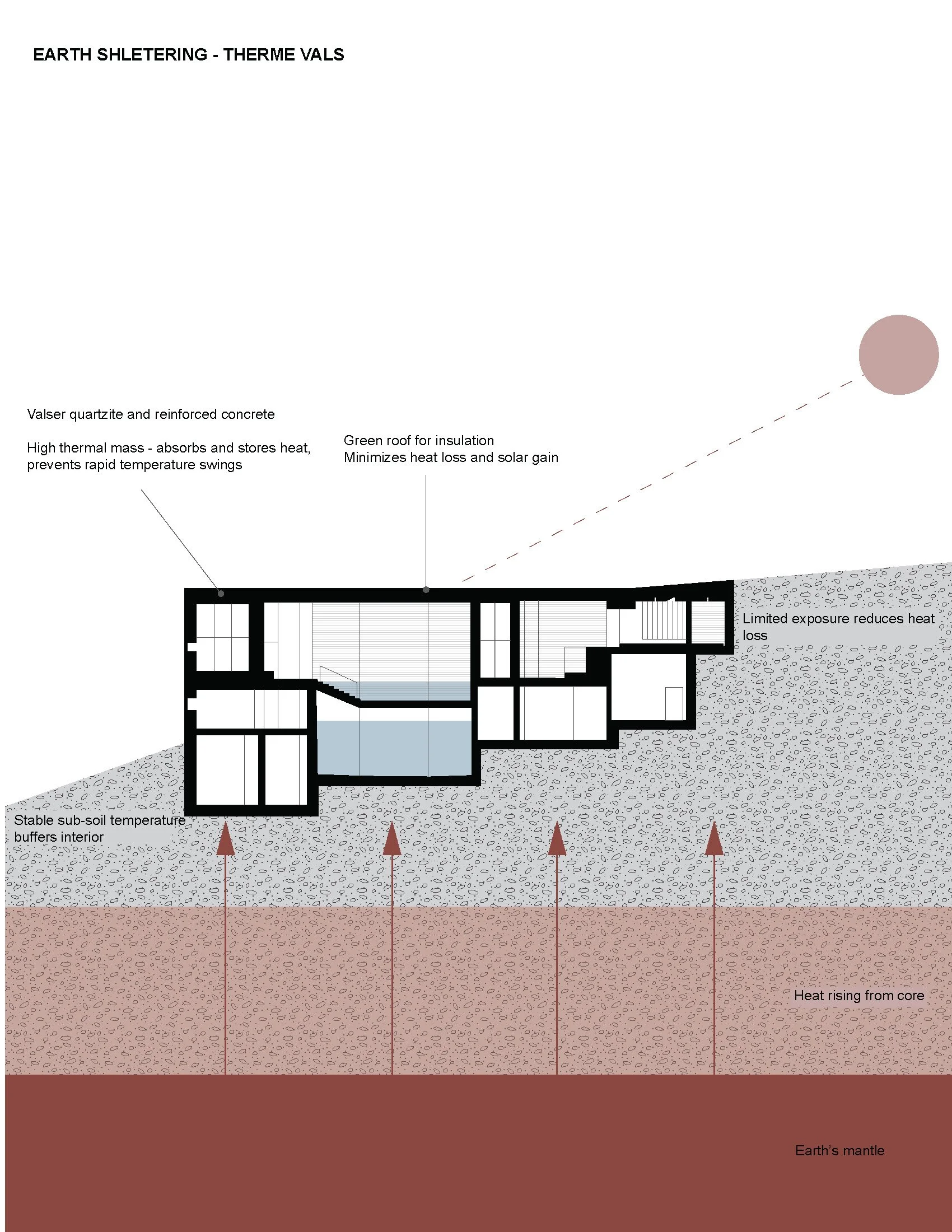
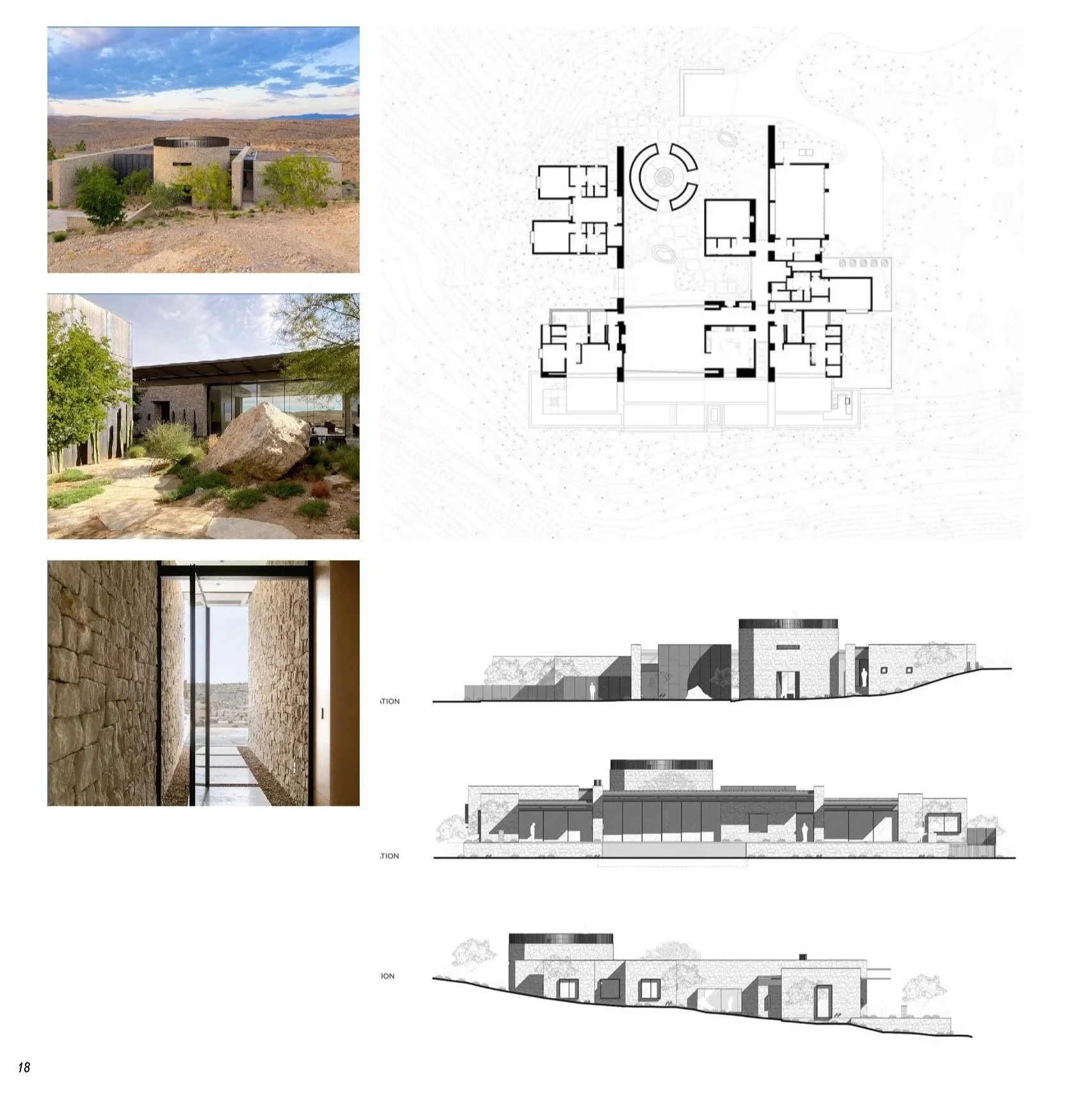
The precedents show how orientation and controlled exposure to direct solar radiation are used to selectively warm interior spaces while minimizing overheating through depth, mass, and shading.
6 Passive Design Strategy Case Study Drawings
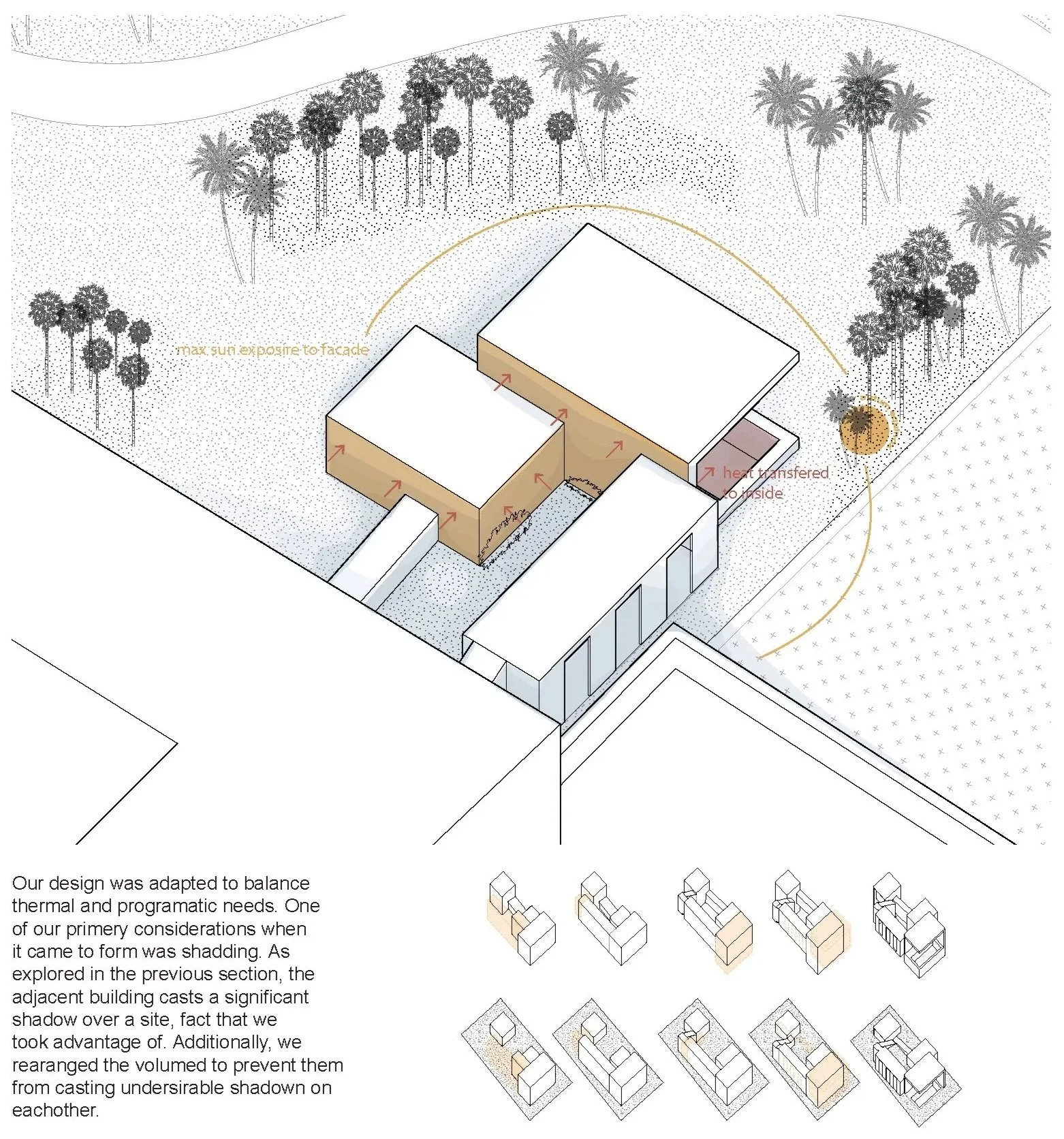
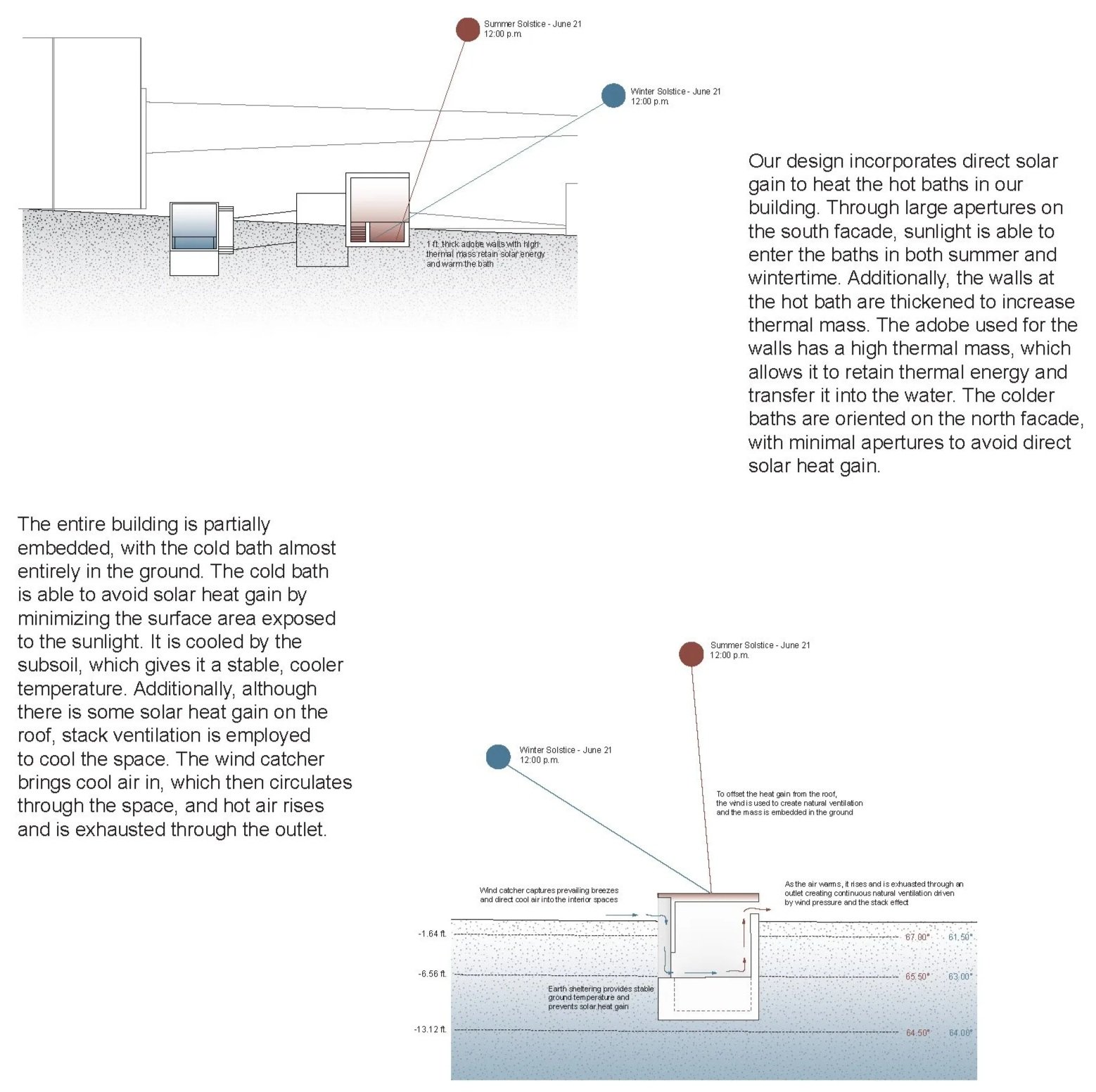
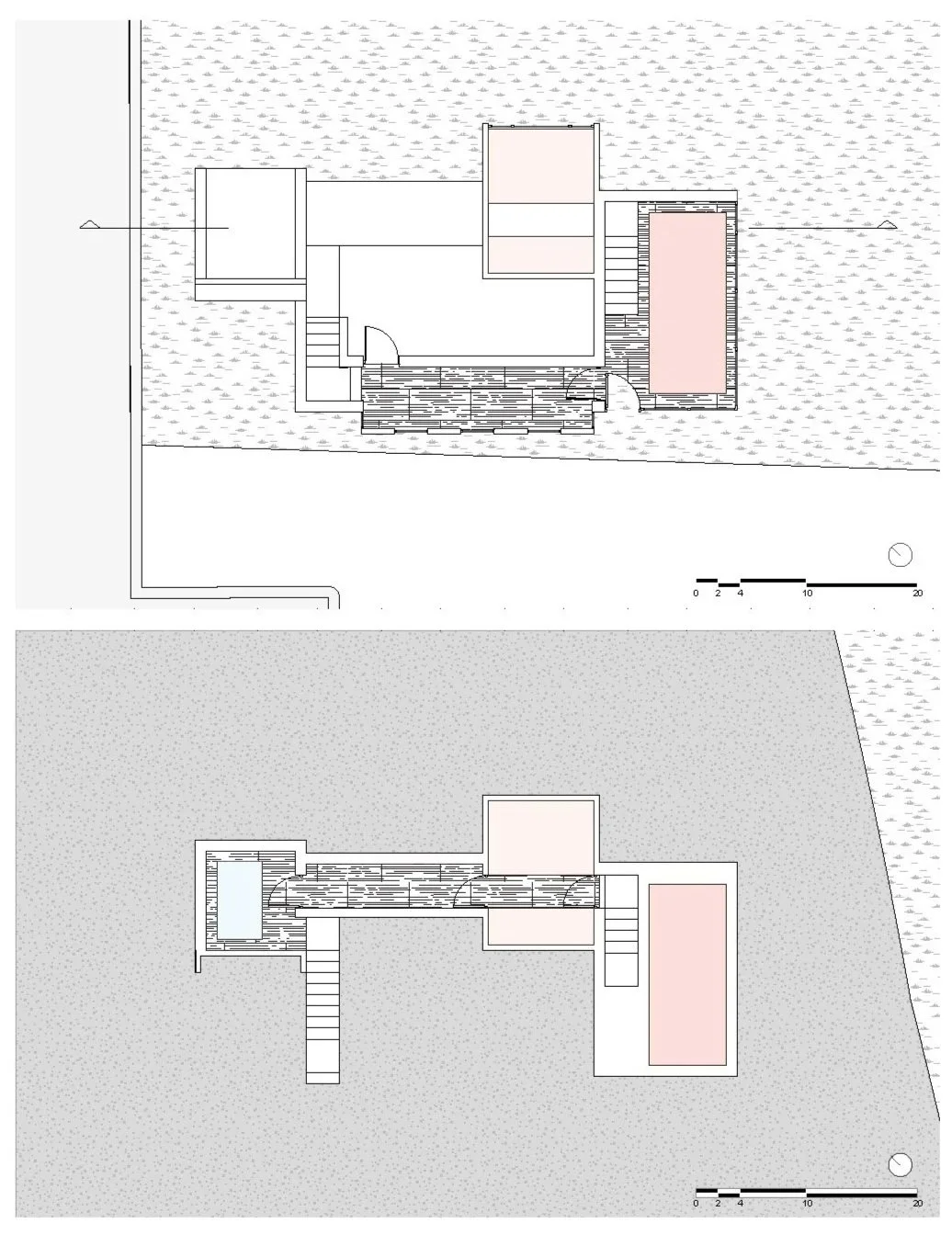
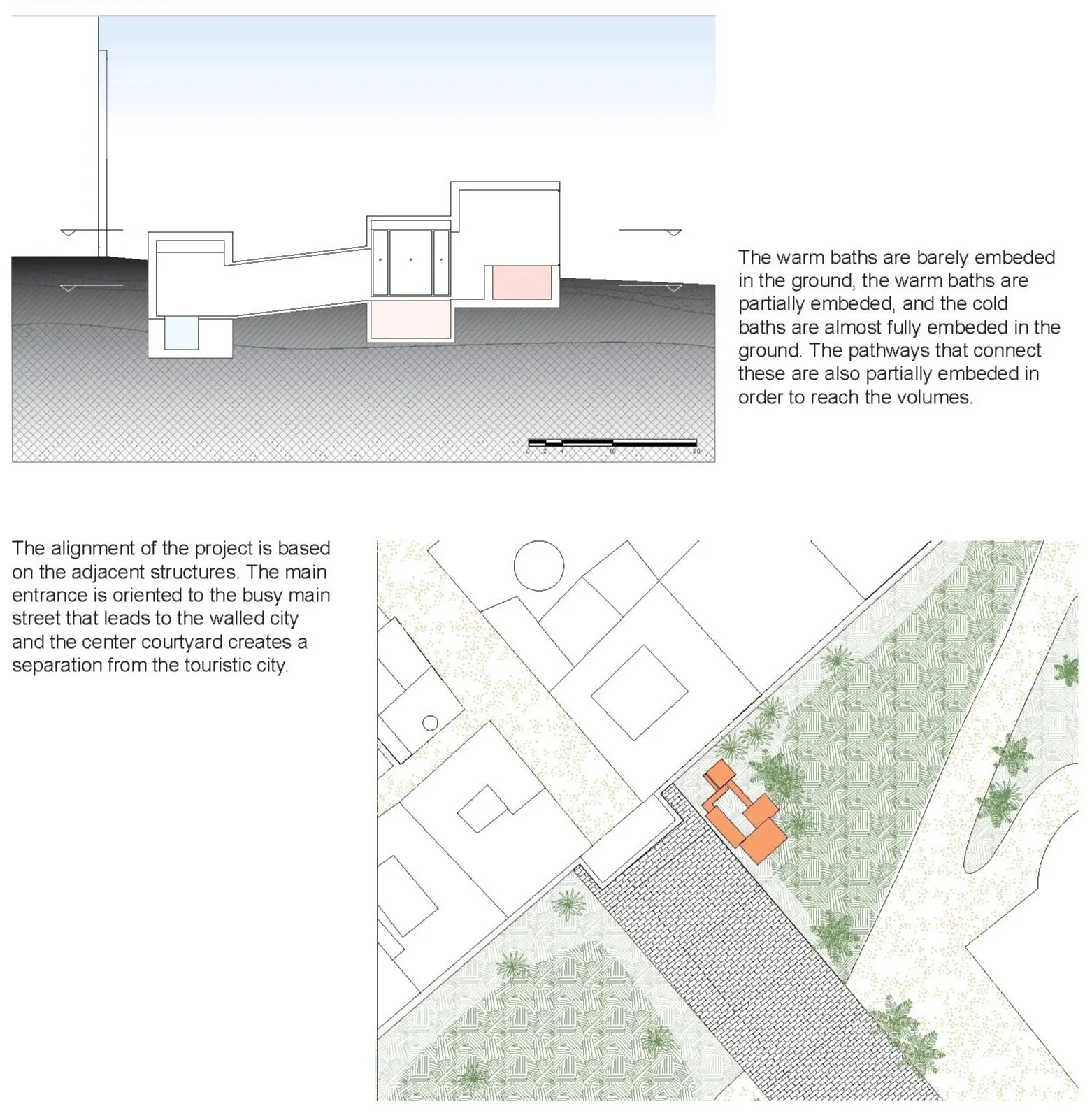
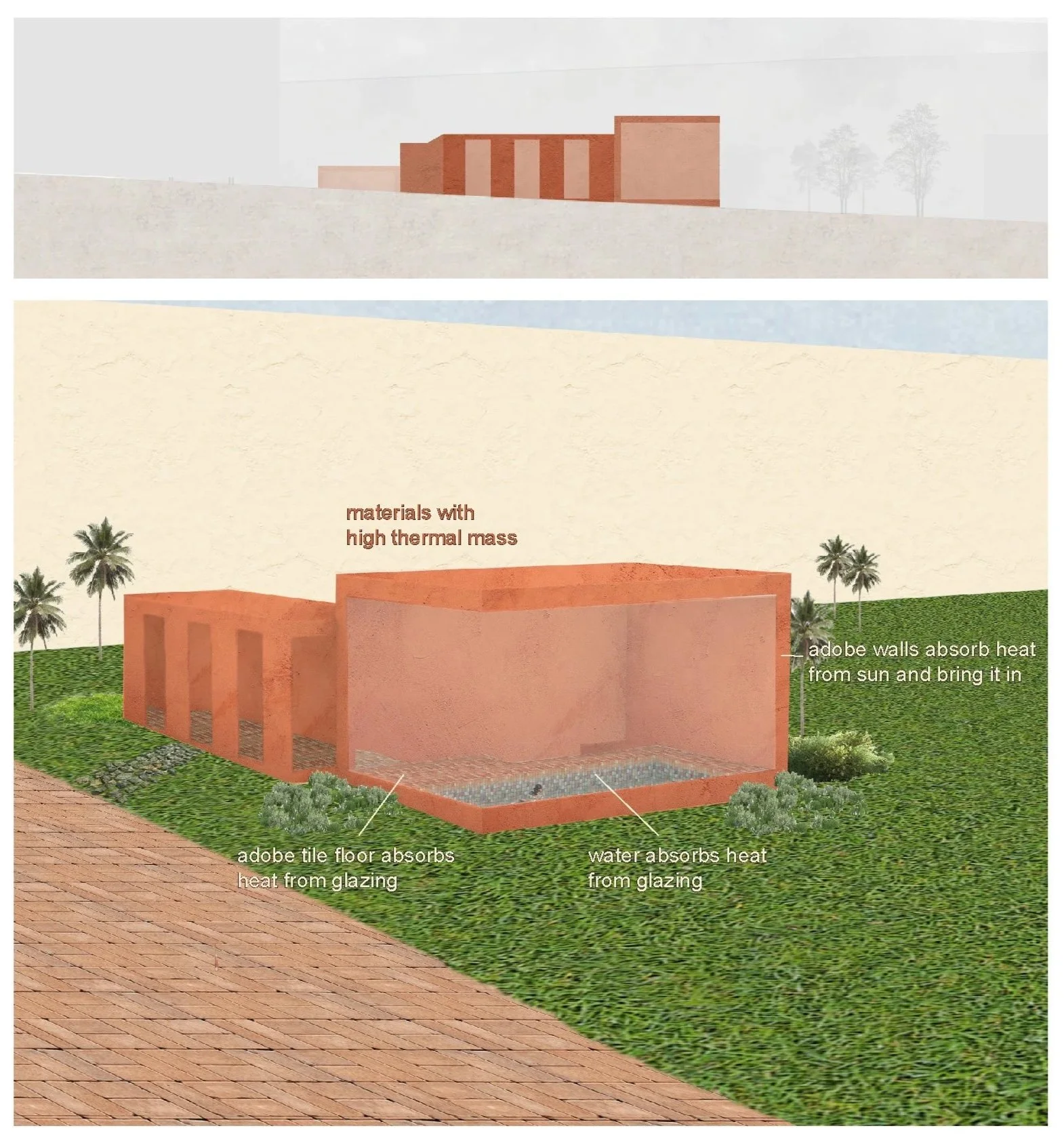
Together, these drawings illustrate how passive environmental strategies operate as an integrated system, linking program, section, material, airflow, and solar control. The plan and sections establish spatial depth and earth contact as primary regulators of temperature, while material diagrams demonstrate how thermal mass moderates heat over time. Ventilation and shading studies further show how building form and orientation guide wind and sunlight to enhance comfort without mechanical dependence.
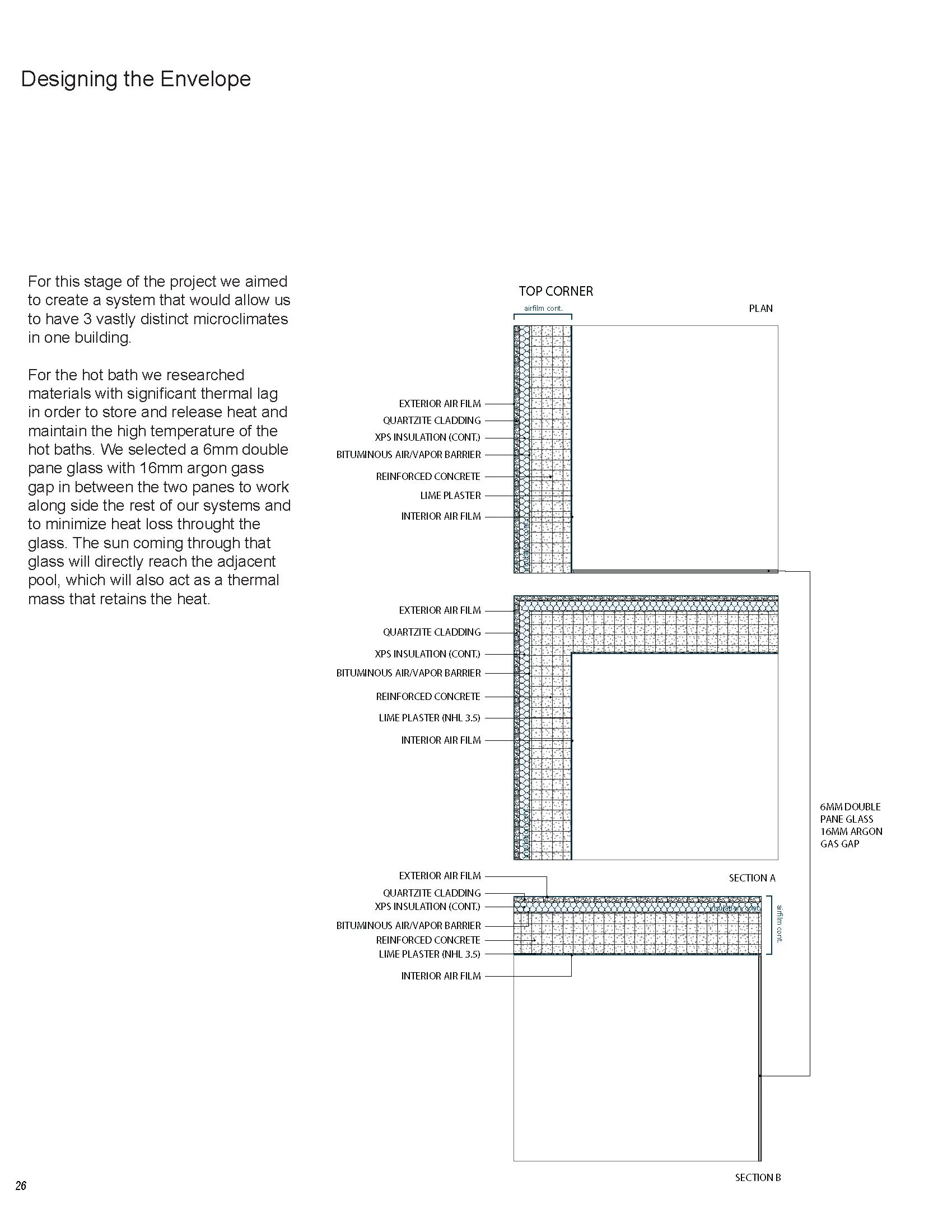
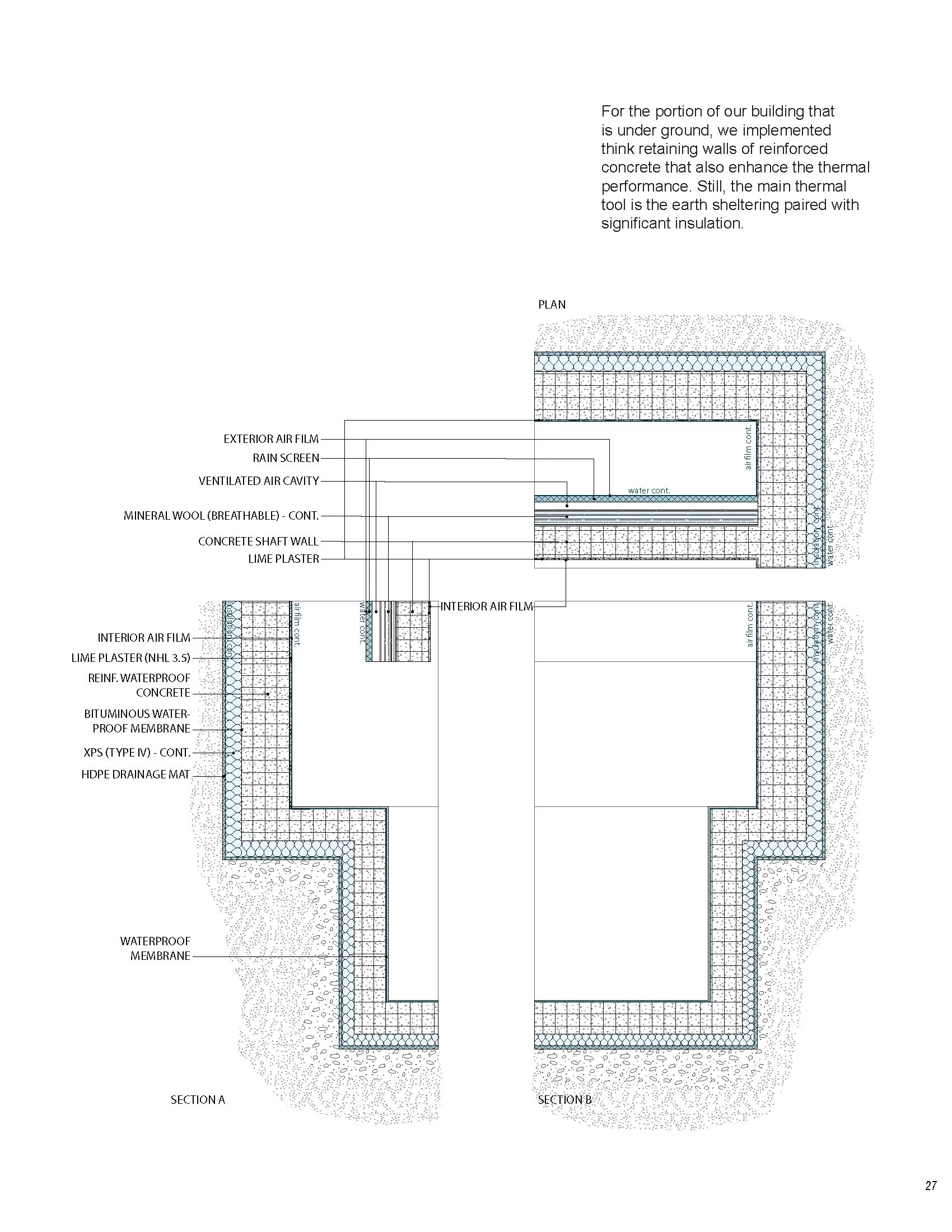
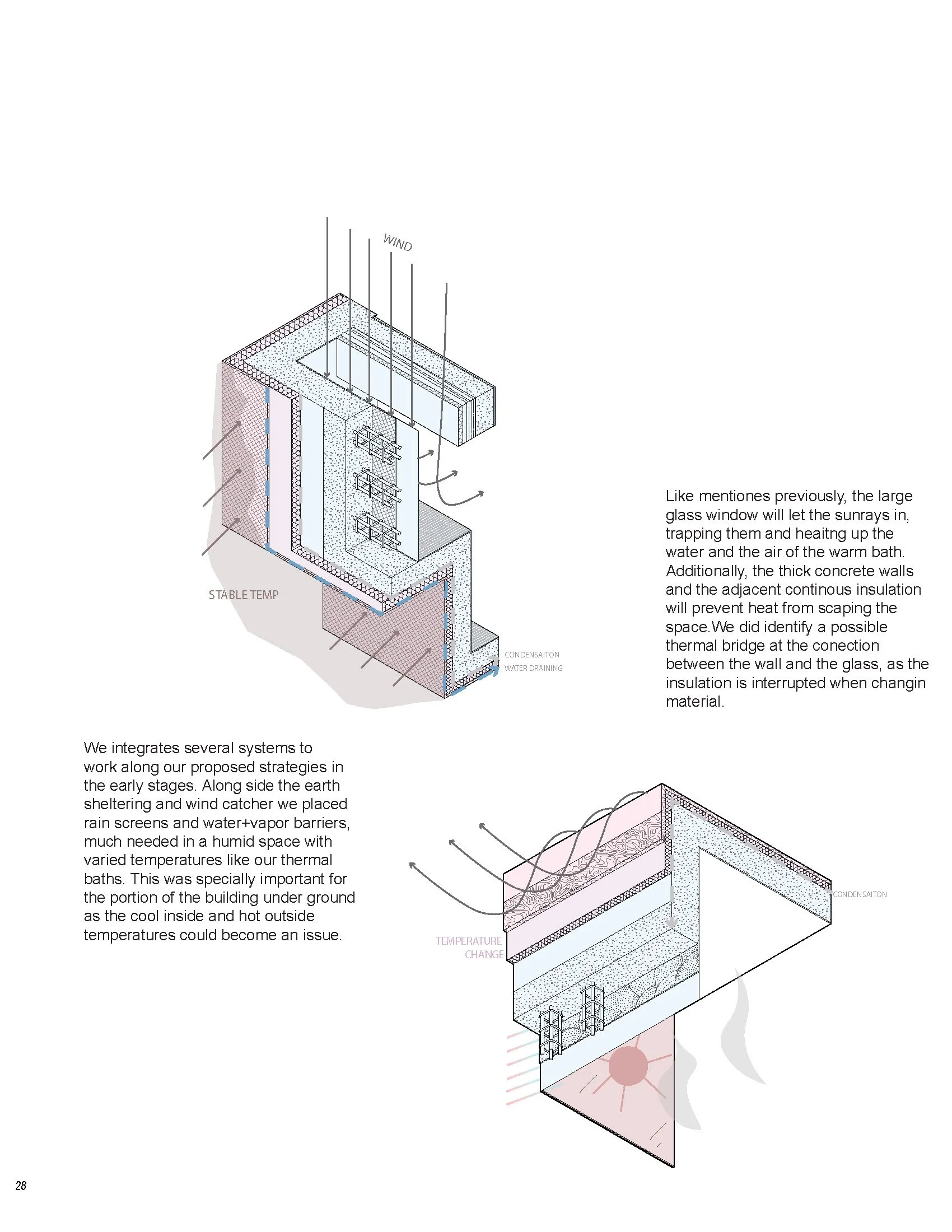
Wall assembly detailing layered construction strategies that integrate insulation and thermal mass to support passive thermal performance in a coastal climate.
This research explored how passive environmental strategies can be synthesized into a cohesive architectural system rather than applied as isolated techniques. Through the study of climate data and precedent, the project demonstrates how decisions in form, section, and material directly shape thermal comfort and spatial experience. The process reinforced the role of architecture as an active environmental mediator, where performance emerges from design intent rather than mechanical dependence.
Reflection